How Vertical Farming Could Transform Urban Life
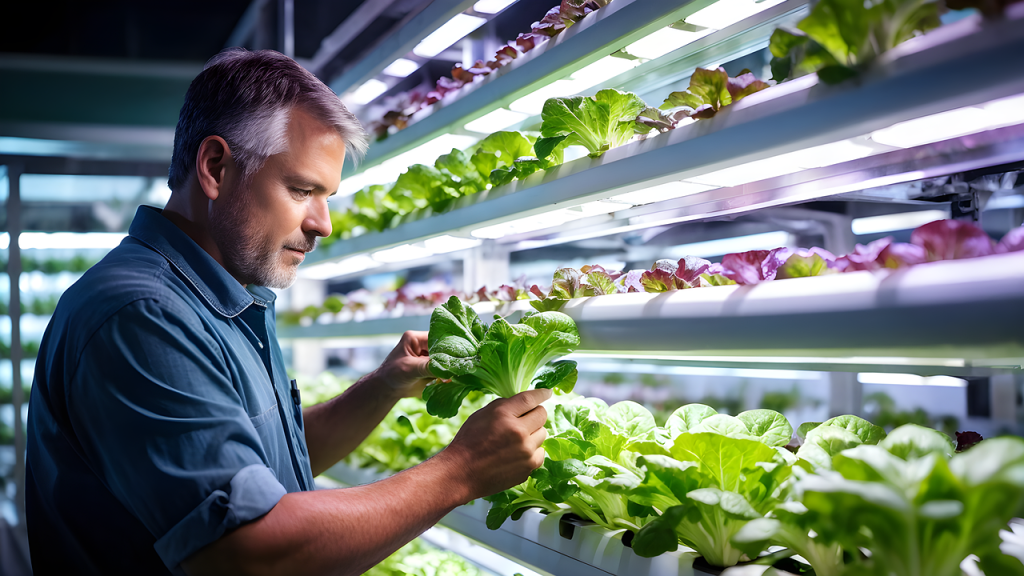
Vertical farming is often seen as a futuristic idea, but its potential impact is practical and timely. Cities across the world are facing rising populations, shrinking land availability, and growing concerns about food quality and supply. The idea of producing food inside the city limits, using tall structures or retrofitted buildings, can reshape how urban life functions. It is not just about convenience. It is about stability, self-reliance, and designing cities that work more like living organisms than concrete machines. The concept continues to evolve, and it may become one of the most important tools for building a post-scarcity future where communities are fed locally and efficiently.
Urban Space Used With Purpose
Most cities have underused buildings and unused rooftop space. Empty warehouses, abandoned retail stores, and parking structures could easily be converted into controlled growing environments. Vertical farming does not need soil in the traditional sense. It relies on hydroponics or aeroponics, and this allows food to be grown without the usual space or weather limitations. The control over conditions reduces the risk of crop failure and can lead to year-round production. This makes urban agriculture less dependent on global supply chains.
Urban life often feels disconnected from nature. Greenhouses stacked into towers or integrated into existing buildings can restore a sense of connection. A vertical farm can supply vegetables to nearby restaurants and grocery stores within hours of harvest. Cities could reduce transportation needs and emissions while providing fresher food to the residents. It also encourages the mindset that a city can actively produce resources rather than simply consume them.
Food Quality and Nutrition
Produce loses nutritional value during transportation. A head of lettuce grown hundreds of miles away may spend days in trucks and cold storage before reaching a customer. When food is grown inside the city, travel time is almost eliminated. That means nutrient density can be preserved and quality can be more reliable. People do not just want to eat. They want to eat food that supports long-term health with clarity and consistency.
Vertical farming makes it possible to fine-tune nutrient levels, lighting cycles, and humidity in ways that traditional outdoor farming cannot easily match. A tomato may be grown with a specific vitamin profile. Lettuce could be optimized for mineral absorption. There is also a reduction in pesticide usage because pests are easier to control in a closed environment. This supports human health and reduces the environmental cost of conventional chemical agriculture.
Local Resilience and Emergency Preparedness
Cities rely heavily on imports for food. This creates a fragile system. If transportation routes fail, the food supply grows unstable immediately. A network of vertical farms distributed through a city can act as a safety net. It allows daily production to continue even during extreme weather or disruptions. Certain city governments have already debated whether food security should be treated as critical infrastructure, similar to energy or water. Vertical farming fits that mindset perfectly.
Emergency response strategies could integrate local agriculture as part of their planning. Hospitals, schools, and community centers could have their own enclosed food production systems. Nutrient rich greens could be grown on-site for patients. Shelters could rely on fresh fruits and vegetables instead of processed cans. The idea is not only about efficiency. It is about dignity in times of uncertainty.
Economic Opportunities in New Forms
Vertical farming creates roles that did not exist a decade ago. There are technicians who maintain hydroponic systems, programmers who regulate lighting through automated software, and logistics specialists who handle delivery routes measured in city blocks rather than national highways. Urban agriculture can become a source of steady jobs for people with practical training.
A city supported by vertical farming might develop its own supply chains inside a ten mile radius. Restaurants could form long-term partnerships with nearby farms inside converted office towers. Apartment complexes could have small vertical farms in their basements operated by the residents. Economic structure begins to blend with civic life when food production becomes local and visible. The work becomes part of the identity of the community rather than just a hidden step in a distant process.
Energy Efficiency and Environmental Impact
Vertical farms require energy to power lights, pumps, and climate control systems. However, recent advances in efficient LED lighting and smart temperature regulation have reduced those costs. Some projects connect vertical farms to renewable energy or recover waste heat from nearby buildings. The environmental impact can become significantly lower than that of industrial agriculture, which often consumes large amounts of water, fuel, and fertilizer.
A city filled with vertical farms could reduce transportation emissions, reduce water usage by up to ninety percent compared to traditional agriculture, and recycle much of its nutrient flow. Food waste can be composted back into the system. This creates closed loops that mimic biological cycles. Cities may eventually operate more like ecosystems rather than concrete networks built for consumption.
Psychological and Social Benefits
Human beings respond strongly to green environments. There is growing research showing that the presence of plants reduces stress and improves cognitive clarity. Urban environments often lack visual contact with nature. Vertical farms could provide daily reminders that life is constantly growing and changing. This is more powerful than a decorative patch of grass. It is a living system with a clear and practical purpose.
Schools could incorporate vertical farms into their education plans. Children could learn biology through direct observation rather than diagrams. Senior centers could host small indoor gardens that grow herbs and leafy vegetables. A person who contributes to food production often feels a stronger connection to their surroundings. It creates community pride and reduces the sense of disconnection that many urban residents experience.
Potential Models for Implementation
There is no single blueprint for vertical farming. Cities may approach it in different ways depending on budget, space, and energy infrastructure. Some possible formats include:
- Abandoned commercial buildings retrofitted into large indoor farms.
- Rooftop greenhouses connected to existing grocery stores.
- Community operated farms inside apartment complexes.
- Public vertical farms tied to municipal emergency preparedness plans.
- Corporate partnerships with restaurants or food markets.
- Educational farms tied to schools and youth programs.
- Hospital based farms linked to nutrition initiatives.
Each model serves a slightly different purpose, but they all share one principle. Food does not need to be distant. It can exist inside the daily life of a city, helping shape the rhythm of that city rather than waiting to be shipped in from far away.
Technology as a Core Enabler
Artificial intelligence is starting to play a central role in optimizing crop cycles. Sensors can measure humidity, temperature, and nutrient levels in real time. Automated systems can adjust growing conditions without human intervention. In some farms, drones or small robots inspect plants and report any signs of stress or disease. Data science merges with agriculture, creating a hybrid discipline that may become common knowledge in future generations.
The combination of vertical farming and smart systems allows a city to gather data about its own food production. It can track seasonal preferences, refine harvest cycles, and identify inefficiencies quickly. Technologies that were once used only in manufacturing or server monitoring are now guiding the growth of vegetables. The city begins to operate as a living structure that adapts and learns.
A Shift in Urban Identity
Cities are often described as centers of consumption and production, but the production is usually industrial or financial. Vertical farming offers a different form of production linked directly to human nutrition. This alters how residents perceive the role of their city. A city that grows its own food is not only supporting its people. It is acknowledging that basic necessities should be as close as possible to the people who need them.
There is also a cultural dimension. Food traditions can evolve in new ways. Chefs could experiment with rare plant varieties and maintain regional identity while using local farms operating on the floors above them. Community gatherings could revolve around seasonal harvests. Farmers markets could operate year-round rather than depending on weather. The modern urban environment would feel less like a sealed box and more like a breathing habitat.
Looking Forward
Vertical farming will not solve every food problem. It has limits on crop types and energy requirements. But it can relieve pressure on traditional agriculture and support major urban centers with reliable and nutrient rich food. It can provide work for people with practical skills. It can reduce food waste. It can restore a sense of nature inside urban life. It moves the conversation away from mere survival and toward intelligent design.
When a city begins to treat food as something that can be grown nearby, the mindset shifts. People start to ask what else can be produced locally. Energy, water purification, and data systems may follow similar patterns. The city becomes more adaptive and less dependent on distant networks. That mindset aligns with a vision of post-scarcity where communities do not simply wait for resources. They participate in their creation.
The transformation of urban life will not happen overnight, but it can begin with a single building converted into a farm. The shift does not need to be loud. It only needs to be steady. Vertical farming is not only an agricultural method. It is an idea that cities can evolve into environments that feed people, support health, and give a sense of meaning through contribution. When that happens, urban life will feel less like an escape from nature and more like a collaboration with it.
